Overview
How might students get experience when every first job already asks for experience?
As part of ESCP Entrepreneur Seed, our international team of five set out to explore a social challenge affecting young people across Europe. What started as a broad conversation about education eventually revealed a much more specific problem:
Students weren’t missing education. They were missing opportunities to prove what they could do.
We created Levelink, a platform where students build experience through short, real-world projects for companies and organizations.
Outcomes
1st Place - ESCP Entrepreneur Seed Madrid
3rd Place - ESCP Europe Final Madrid, Paris & Berlin
Problem
You need experience to get a job. But you need a job to get experience.
Students entering the job market face a simple contradiction:
No experience → No job → No experience
Traditional education can prepare students academically, but graduating with a degree does not necessarily give employers evidence of how someone performs in a real working environment.
This creates an especially difficult first step into employment
Reframing the problem
We started by solving the wrong problem.
Our first workshops focused on identifying social challenges. The team initially aligned around a broad theme: “Lack of education.”
But as we discusssed the problem and started talking to students and other stakeholders, that framing began to fall apart. Students already had access to degrees, courses and learning platforms. What they were missing was the bridge between learning and working.
Our reframing: Education → Employability → Practical experience → Access to the job market
Research
Employability involves more than job seekers, so we interviewed stakeholders across the system:

We also spoke with a professional involved in a university-industry programme connecting students with real company projects for their final-year work.
We wanted to understand three things: What stops students from gaining experience? What makes junior recruitment difficult for companies? What incentives do universities have to improve employability?
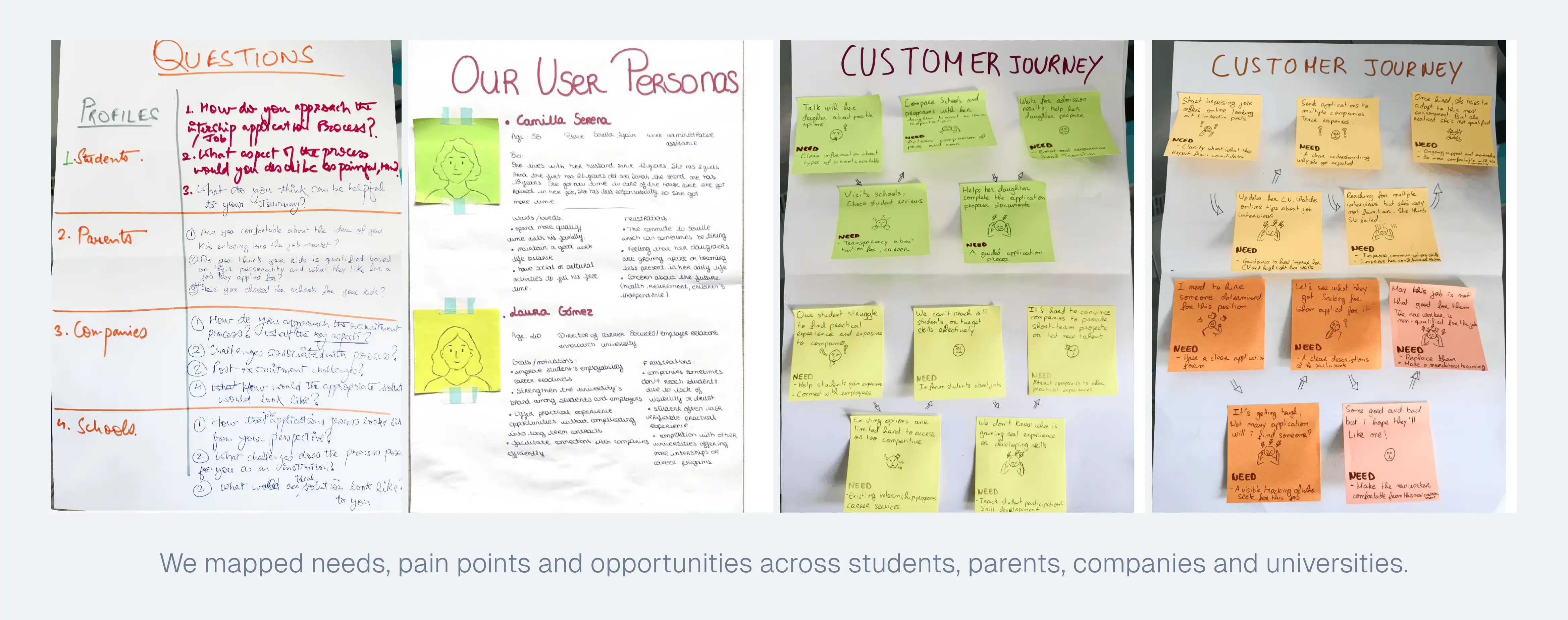
Key insights
01 — Students wanted proof, not another profile
Students didn’t need another place to upload a CV. They wanted opportunities that could give them real evidence of their skills before graduating.
02 — Companies needed a lower-risk way to discover junior talent
Hiring someone with little professional history is uncertain. Short, scoped projects could allow companies to see how students actually work before considering a longer-term relationship.
03 — Universities cared about employability, but weren’t equally viable customers
Both public and private universities saw value in improving graduate outcomes, but interviews exposed an important business constraint:
Interest does not always mean ability to buy.
Public institutions introduced longer procurement cycles and tighter budget constraints, making them difficult early customers.
Opportunity
What if experience could come before employment?
Our research led us to a more focused question: How might we help students gain relevant experience before graduation while creating value for companies and universities?
Solution
Levelink connects students and companies through short, real-world projects.
Students gain practical experience, build evidence of their skills and earn money.
Companies get support on scoped projects while discovering emerging talent through actual performance.
And Universities offer students a practical bridge into employment and track employability outcomes.
Building trust into the platform
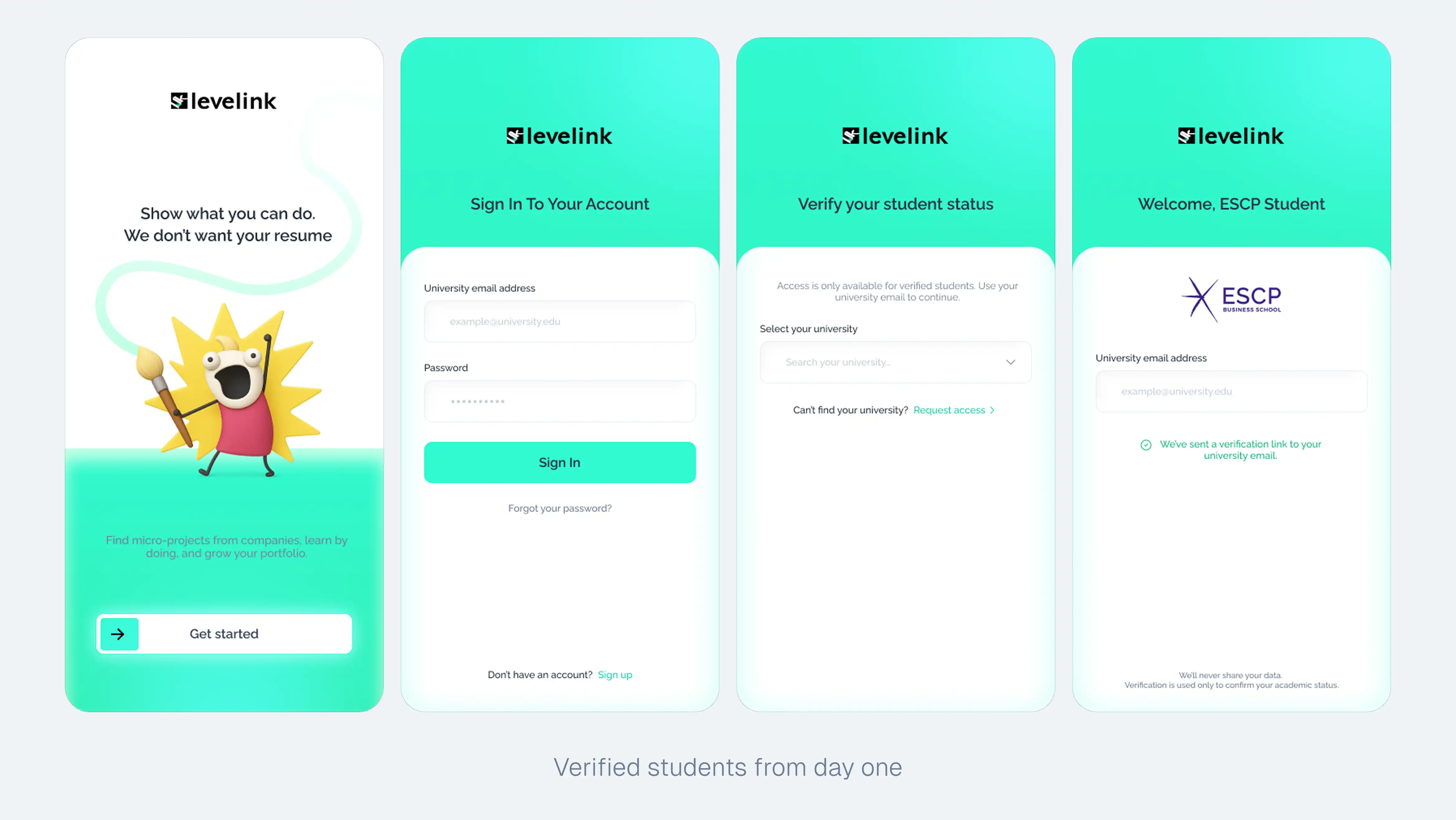
Because Levelink connects students with real companies and paid projects, access needed to feel credible from the start.
Students verify their status through their university email before joining the platform, creating a more trusted environment for both students and companies.
How it works
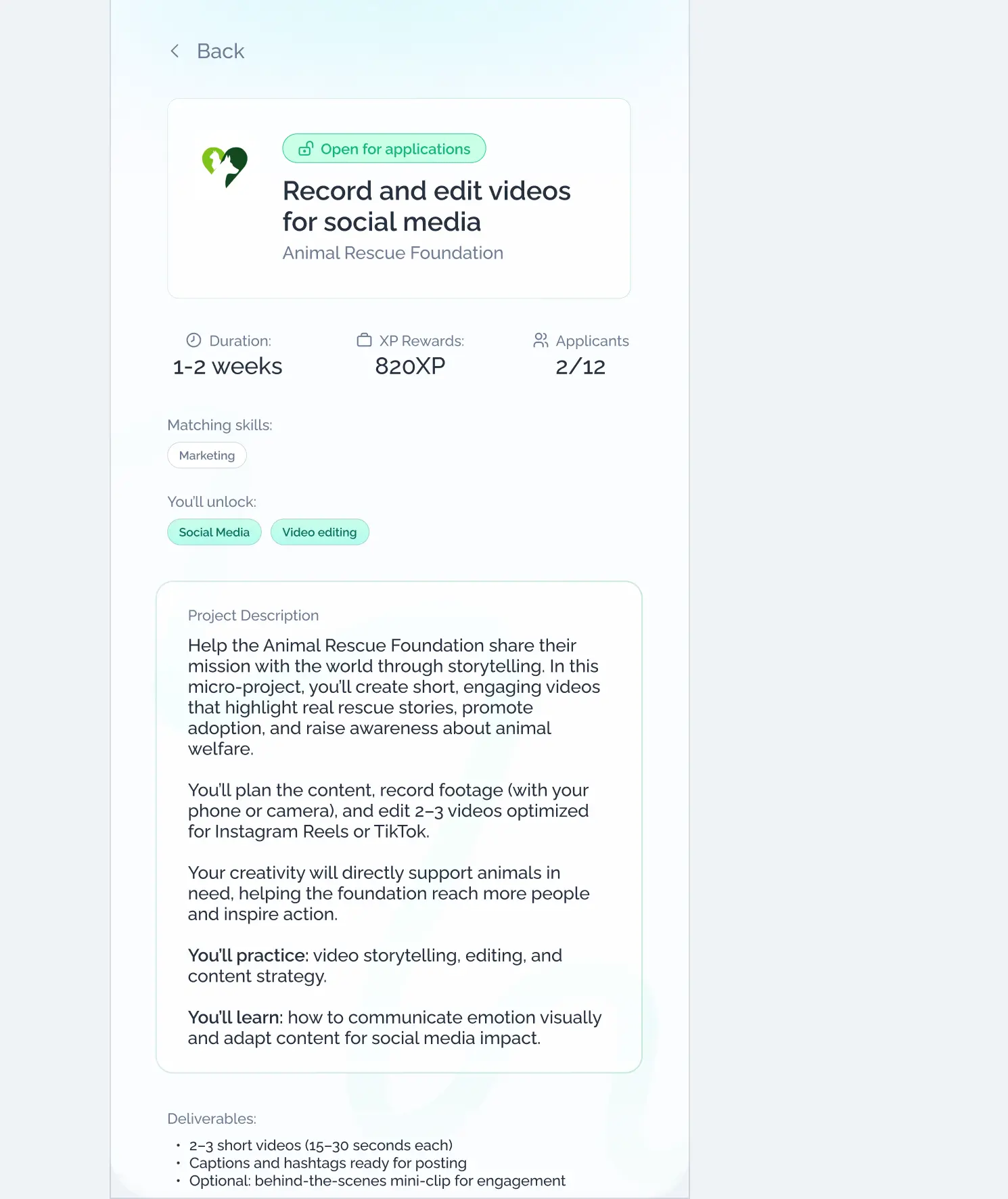
1. Companies publish a project.
A clearly scoped challenge with defined deliverables.
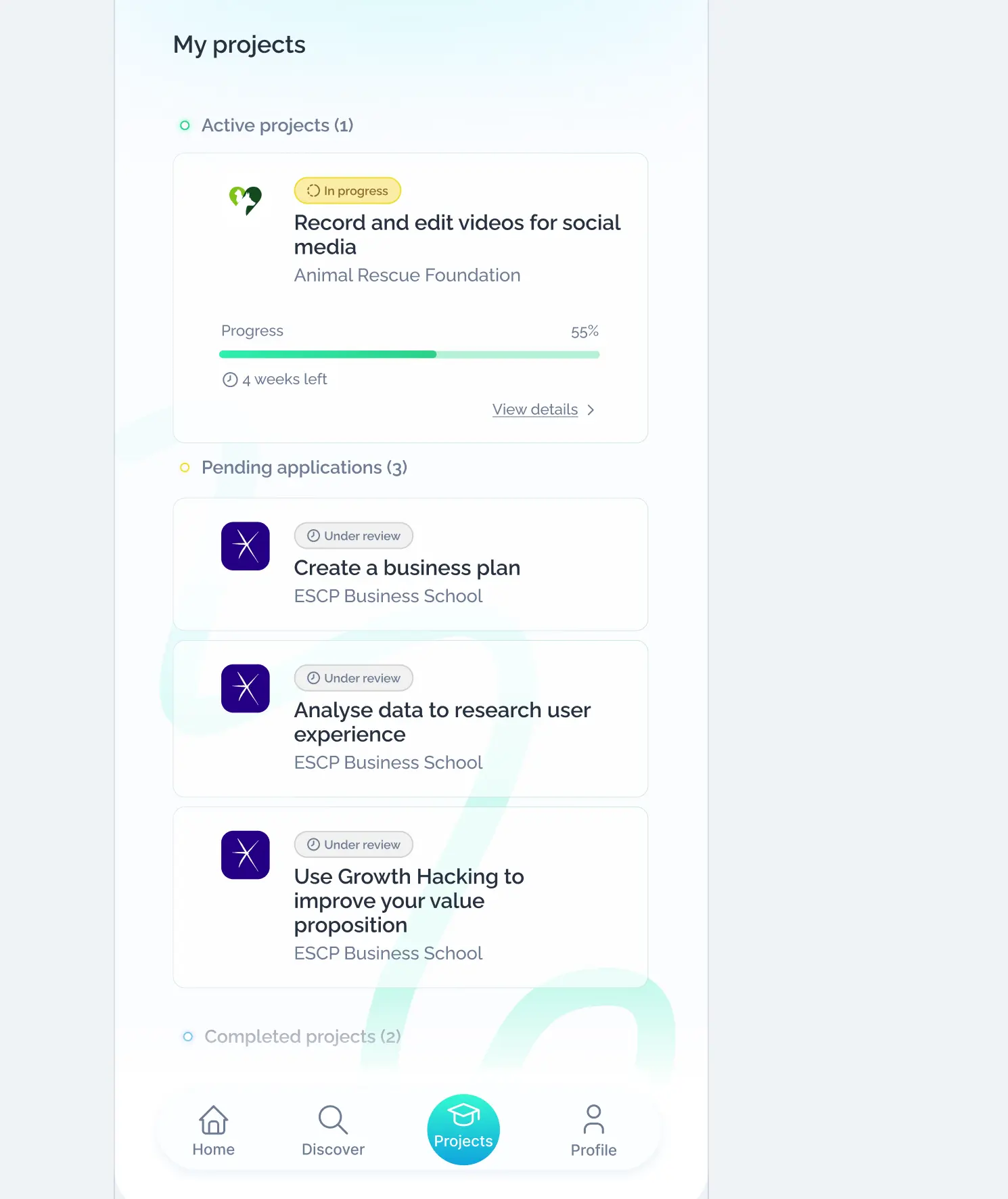
2. Students complete real work.
Projects create experience without requiring a traditional long-term hire.
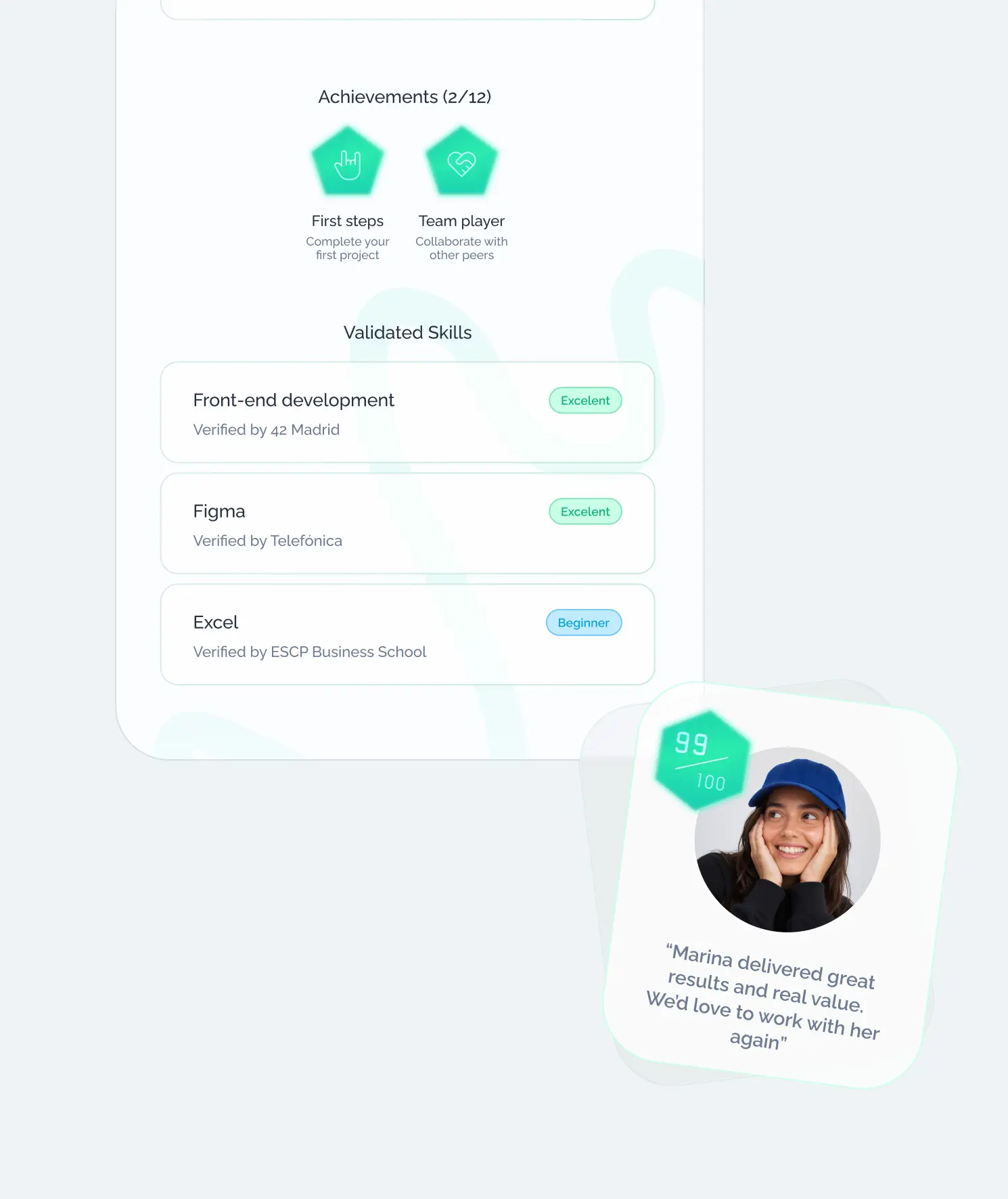
3. Companies evaluate performance.
Instead of relying only on CVs and interviews, companies see evidence of students’ work.
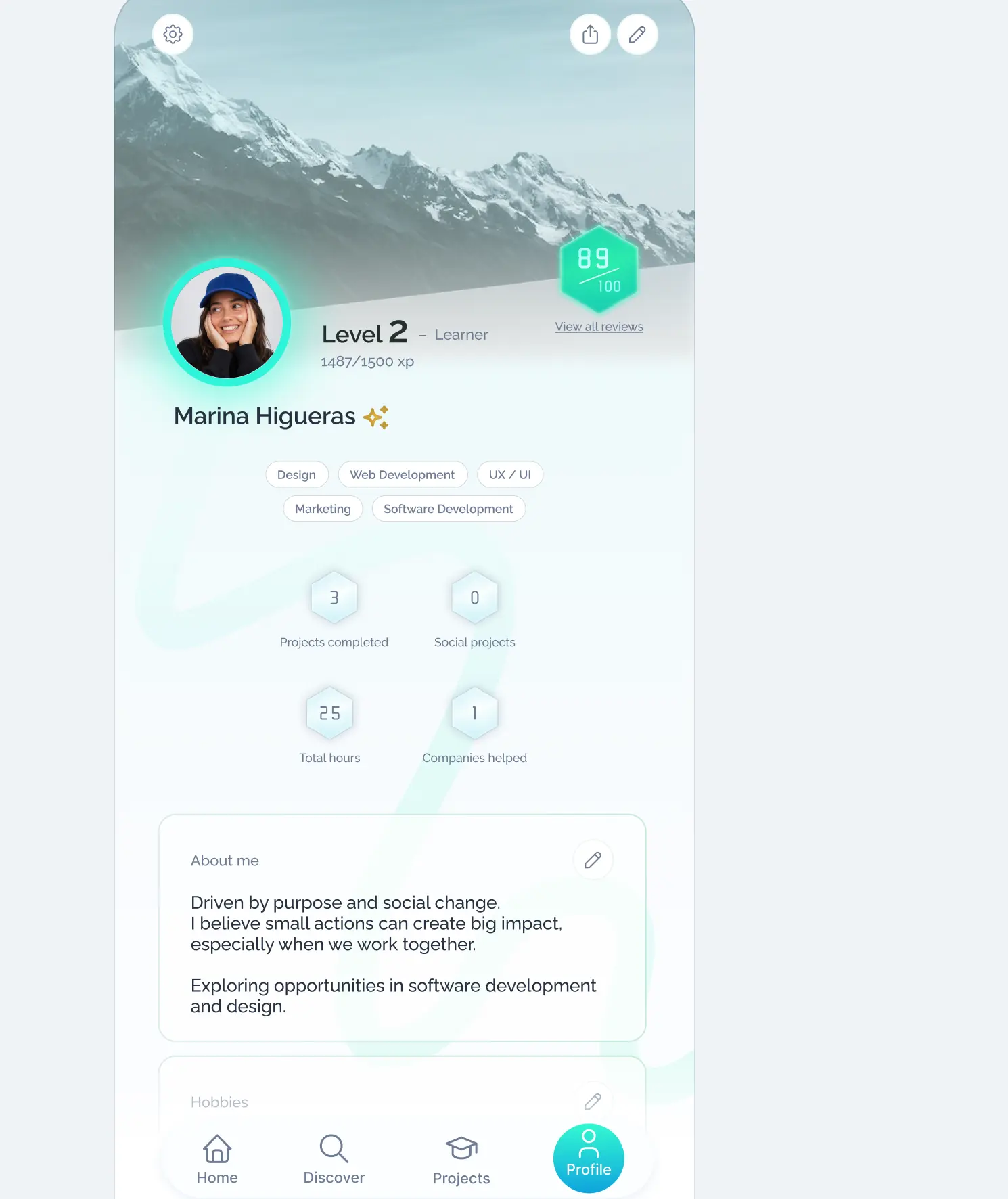
4. Students build a verified track record.
Every completed project makes the next opportunity easier to access.
Product Strategy
As Product Lead, one of my main responsibilities was challenging early assumptions and translating what we learned into decisions about pricing, go-to-market and the Levelink ecosystem.
Decision 01: I challenged the student subscription model.
Our initial model relied on charging students for access to the platform. I challenged this approach because it conflicted with the problem we were solving: many students were looking for opportunities precisely because they needed additional income.
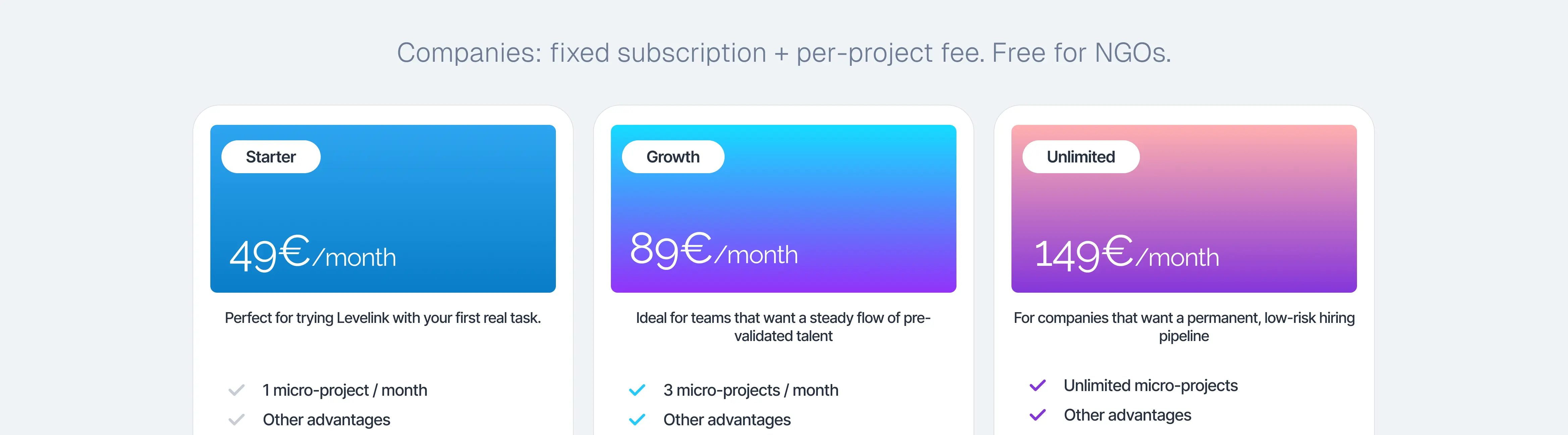
I advocated for keeping the core student experience free and shifting monetization toward companies and institutions. To balance accessibility with financial sustainability, we ultimately aligned on a freemium model.
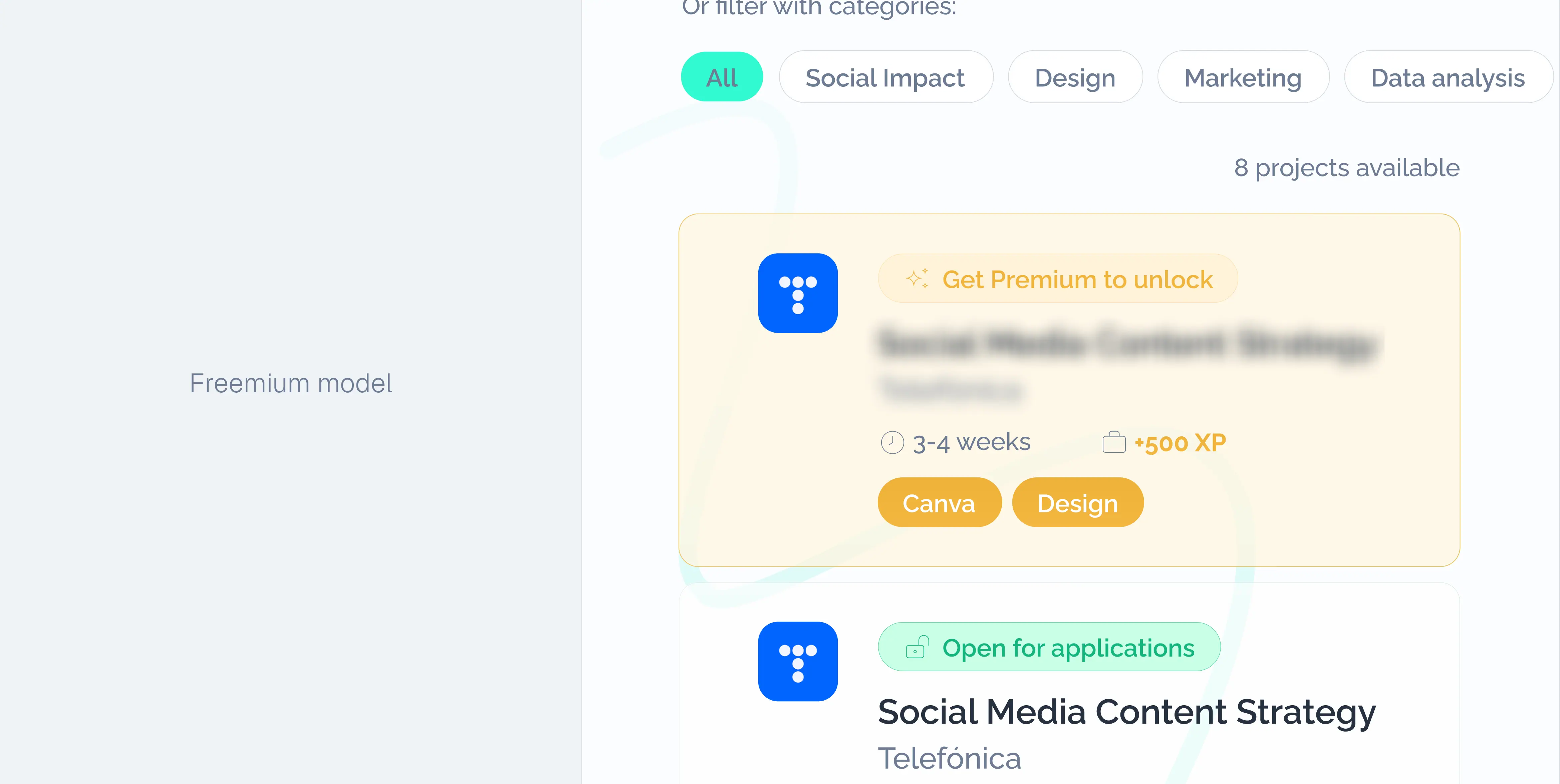
Decision 02: I redirected our go-to-market towards private universities.
Universities initially appeared to be a single customer segment. Through our interviews, I identified a key differnece between public and private institutions: while public universities showed interest, procurement complexity and budget constraints made them unrealistic early adopters.
I recommended focusing our initial go-to-market on private universities.
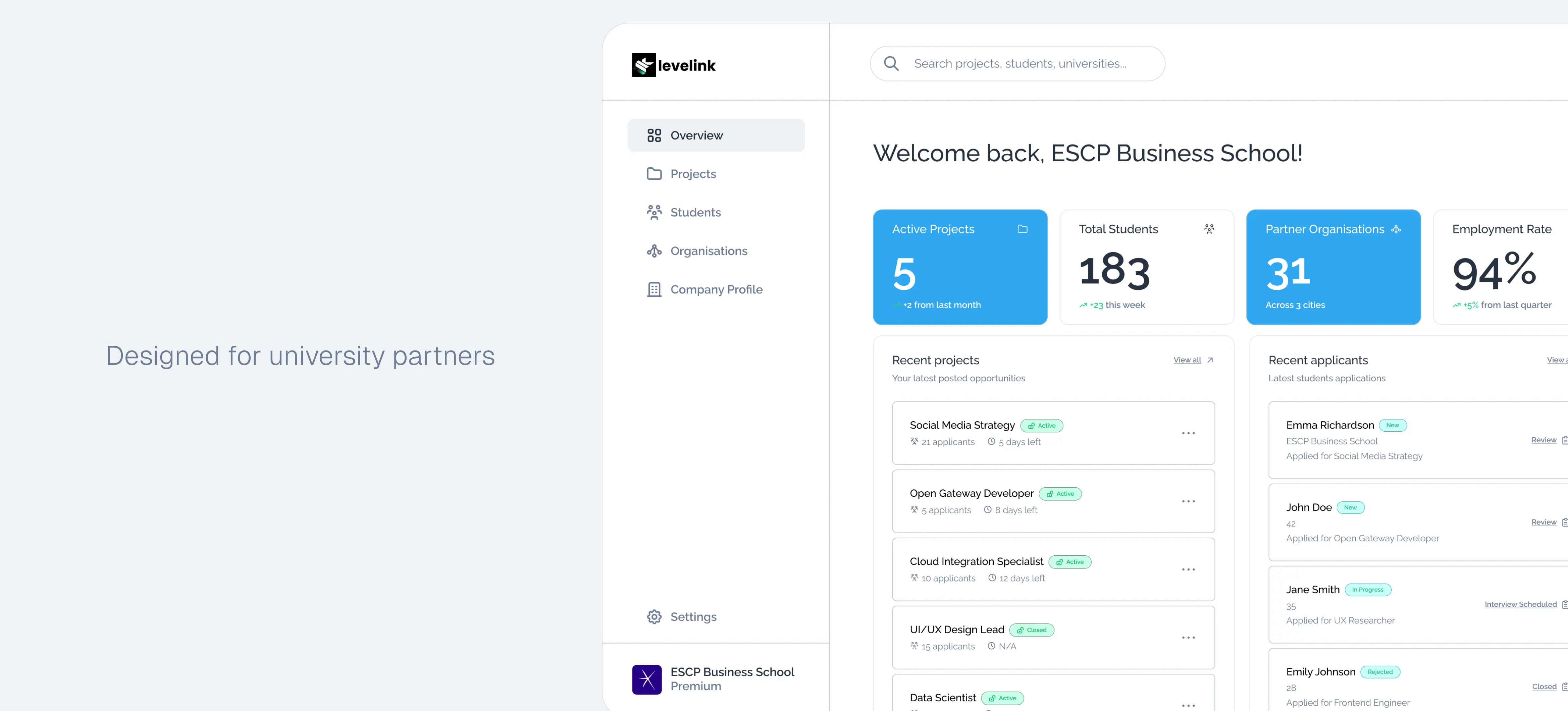
Decision 03: I pushed for a more realistic financial model.
Our early projections included founder salaries and optimistic assumptions about institutional revenue. I challenged those assumptions and advocated for a leaner model based on realistic adoption and long-term sustainability.
The goal was to build a credible business case, not the most attractive spreadsheet.
Decision 04: I expanded the ecosystem beyond companies.
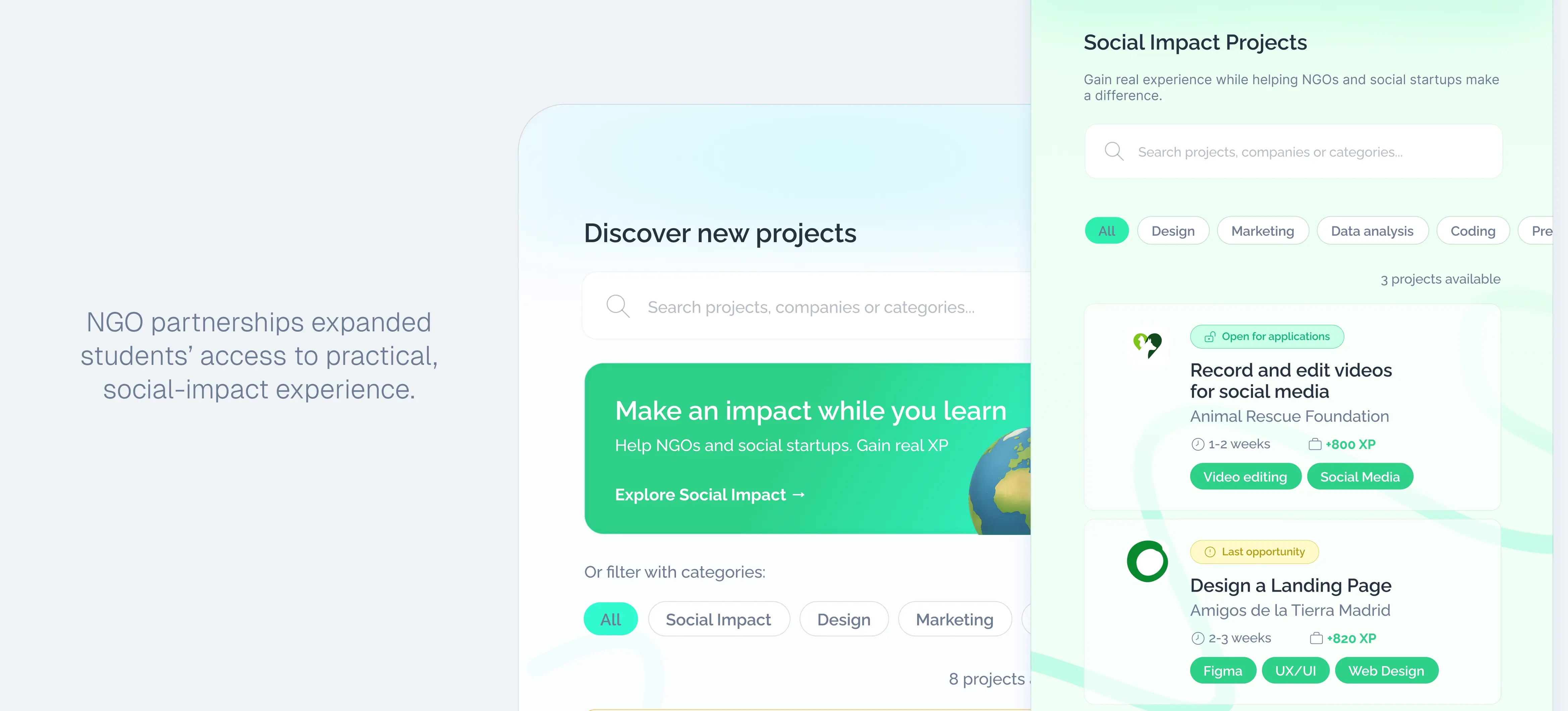
I saw an opportunity for Levelink to create value beyond traditional employment so I proposed introducing NGOs as project partners, giving students another way to gain practical experience while contributing to social-impact work.
This expanded Levelink from a talent marketplace into a broader platform for experience-building.
Product Tension
Companies could potentially use students for repeated short-term work instead of creating proper junior positions. That means Levelink would need mechanisms to protect students as the marketplace scales. Potential future safeguards include: project scope limits, fair compensation standards, company reputation signals, repreated-project monitoring and clear pathways from projects to employment.
Creating acess to experience only works if that experience remains fair.
Reflection
Research can change the business, not just the product. Our interviews didn’t simply validate features. They changed who we sold to, who paid and how Levelink could become sustainable.
Interest doesn’t always mean fit.
Public universities supported the idea, but organizational constraints made private universities a much stronger entry point.
Leadership means aligning around evidence.
Working with five people from different countries and disciplines meant opinions were inevitable. My role was increasingly about bringing decisions back to what we had learned.
Good decisions start with challenging assumptions.
Removing student subscriptions, changing our go-to-market and revising our financial assumptions all required letting go of ideas we had previously believed in.
This project taught me that building the right product often starts by being willing to admit you’re solving the wrong problem.